


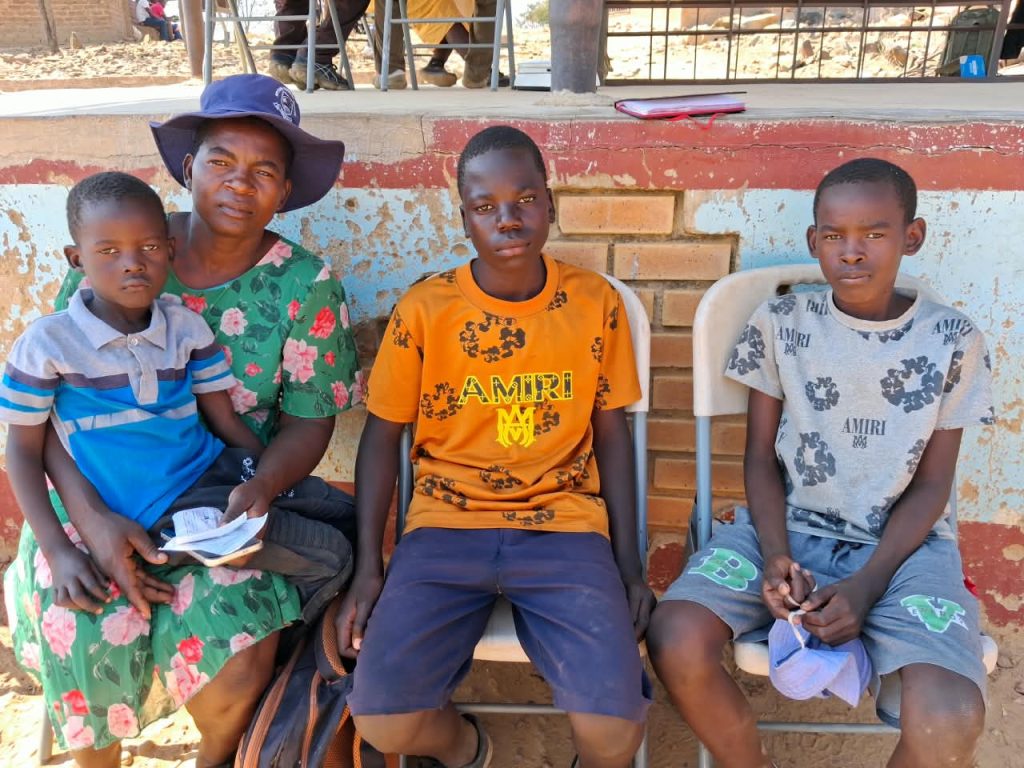
When Viola Chikomo (36) of Village 12 Mujeni Shamrock, a rural community nestled in Chegutu and her husband were diagnosed with TB and initiated on treatment – they thought the worst was behind them. Viola’s husband, an artisanal miner had initially refused to seek treatment insisting he was going to get better. After a short while, Viola also started experiencing similar symptoms – persistent cough, loss of appetite, fatigue and weight loss, a community health worker immediately accompanied them to the local health facility.
The couple was referred to Chegutu District Hospital where they were both diagnosed with TB after chest x-rays were conducted. They were immediately started on TB treatment, but their relief was short-lived – healthcare workers repeatedly urged them to bring their family members to the local clinic for contact tracing.
Both husband and wife were hesitant – walking long distances to the clinic with five young children and a daughter-in-law felt overwhelming. Compounded by fear of public judgment and the financial burden of transport in case they were referred to the district hospital, week after week passed without the family being screened.
The turning point came when a mobile screening truck rolled into the local business centre.
“I know about the truck and was aware that it had everything from x-rays and the ability for onsite testing and I knew I had to seize the opportunity to take in all my children,” Viola says.
The community screening outreach using the mobile truck was being conducted by the Ministry of Health and Child Care with support from FACT Zimbabwe and Union Zimbabwe Trust under Life Saving Facility and Community-Based Service Delivery Support (FC-SDS) Project supported by the United States Government. The barrier of distance was suddenly eliminated.

Among Viola’s children was a five-year-old *Malvin, at screening he was considered small for his age – the little boy was identified as a presumptive TB case. Because young children often struggle to produce sputum, the health workers guided his mother on collecting a stool sample on-site—an innovative, non-invasive method used to detect TB in young children.
The stool sample was processed using rapid molecular testing, but the laboratory result came back as “MTB Not Detected.” While a negative stool test often brings relief, the clinical team knew that paediatric TB is often difficult to capture through bacteriological tests alone.
Rather than sending the family home, the clinical team at the mobile unit conducted a thorough clinical evaluation. Assessing Tinashe’s persistent symptoms, weight loss, history of prolonged exposure to two confirmed adult TB cases in the household, and physical exam findings, the health officer made a definitive clinical diagnosis of childhood TB.
Without delay, Malvin was registered and initiated on childhood TB treatment right there at the business center. The team provided clear guidance to Viola on treatment adherence, while ensuring the rest of the household members received preventive care and clear pathways for follow-up.
“Even though the screening took longer than I had initially anticipated, I was patient. I am happy that the children got tested free of charge, no treatment and transports costs. Despite not having brought the children earlier, at the back of my mind I knew I needed to get medical attention for them because they had been exposed to me and my husband,” Viola says shyly with a smile.
“Now that we know, we can properly care for Malvin at home.”
Under the FC-SDS project, medical teams are deploying mobile X-ray units equipped with AI software capable of identifying potential TB cases within minutes, enabling early diagnosis and immediate referral for treatment. The drive is specifically targeting high-risk groups, including the elderly over 65, individuals living with HIV or diabetes, miners (like Viola’s husband), ex-miners, smokers, healthcare workers, and anyone with a persistent cough or a history of TB exposure.