



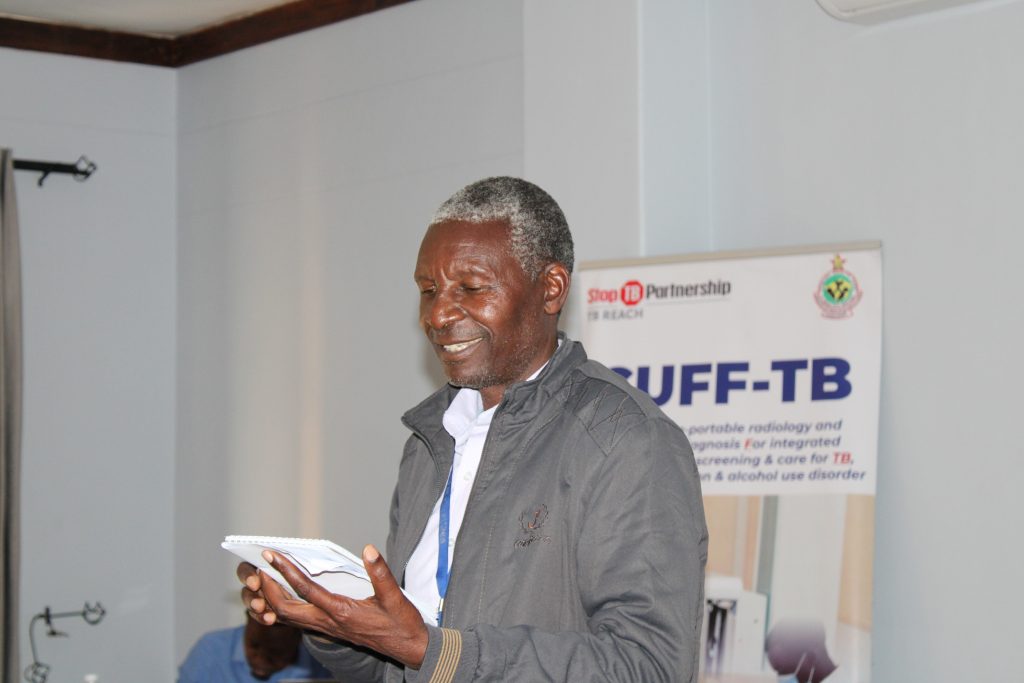
“This training has provided me with a strong foundation on occupational health and the importance of history taking when screening for Tuberculosis (TB) and Silicosis. As healthcare workers, we should not just focus on the job title but place emphasis on the duration and main activities of the patient’s job so that we can arrive at the correct diagnosis.
We cannot assess TB and ignore the five risk factors of TB; malnutrition, smoking, alcohol use disorder, HIV and Silicosis.”
These were the words of Hellen Masaitore, a nurse from Mberengwa District Hospital, after attending a training for healthcare workers on TB and occupational health in Bulawayo ahead of TB screening outreaches expected to start in July 2025, under the Stop TB Partnership’s TB REACH Wave 11 funding mechanism.

The project is being implemented by Union Zimbabwe Trust (UZT), in collaboration with Ministry of Health and Child Care (MoHCC)’s National TB and Leprosy Control Programme under the ‘CUFF TB’ banner – CAD-AI, Ultra-portable radiology and Field-based diagnosis For integrated community level screening & care for TB, silicosis, malnutrition & alcohol use disorder.
The focus is to integrate TB, lung health services and associated systemic risk factors such as alcohol use disorders and malnutrition at community and primary care level through use of ultra-portable X-ray, enabled with artificial intelligence (AI) for computer aided detection (CAD)as well as on-site field laboratory diagnosis using WHO-recommended rapid molecular tests.
The training in Bulawayo was attended by 56 people including healthcare workers from 25 prioritized health facilities in the two districts of Mberengwa and Zvishavane. The objective was to strengthen the capacity of healthcare workers to facilitate a seamless and effective implementation of the CUFF TB project, complemented by a network of 187 community health workers and peer mobilizers who were cluster-oriented to provide integrated community screening services in both routine and outreach settings across the two districts.
Munesu Dube, a training participant nurse from Jeka Rural Hospital in Mberengwa District noted that, “early diagnosis of lung health conditions such as TB, Silicosis, coal worker pneumoconiosis plays a crucial role in timely care and management thereby saving lives.”
Deputy Director AIDS and TB, Dr Fungai Kavenga speaking to the healthcare workers at the training, said the project is key to recording gains in ending TB in the country. Zimbabwe remains among the most affected countries in the world with an estimated TB incidence of 211 per 100 000 population in 2023 (according to Global TB Report, 2024).

“There is need to adopt new innovations, strategies and relevant tools and the innovative CUFF-TB timing is perfect. We expect to reach more people in mining communities which remain high-risk areas for TB and Silicosis. We are proud to be rolling out this innovative, person-centered initiative in Mberengwa and Zvishavane districts,” said Dr Kavenga.
His sentiments were echoed by Zvishavane District TB Coordinator, Nkulumo Ncube, a participant at the training, “The training has set a strong foundation on how we are going to increase case finding as a district as well as improve on case management.”
UZT Executive Director, Dr Ronald Ncube said it is expected that these investments in capacity building – a fundamental component – will directly translate to higher case detection, better patient outcomes and a stronger public health response to TB in mining communities that can be replicated in other settings.
In March 2025, community dialogues were held with influential leaders in both districts to foster local ownership, support and create demand for integrated service delivery. The healthcare workers will be guided by a TB diagnostic algorithm that was revised in March to include silicosis, malnutrition, and alcohol use disorders, laying the groundwork for a comprehensive screening model.