



In the artisanal gold fields of Zimbabwe, a dangerous misconception has long dictated health-seeking behaviour – the belief that Tuberculosis (TB) always announces itself with unmistakable signs like a persistent cough, dramatic unintended weight loss, or drenching night sweats and fever. Because thousands of artisanal and small-scale miners (ASMs) feel “perfectly fine,” they rarely seek screening, operating under a false sense of security and immunity while working in one of the country’s most hazardous occupations.
However, public health experts advise that this reliance on symptoms may be a deadly gamble. Early-stage TB— can be completely asymptomatic or present with only subtle or non-specific symptoms especially in lungs already compromised by occupational silica dust.
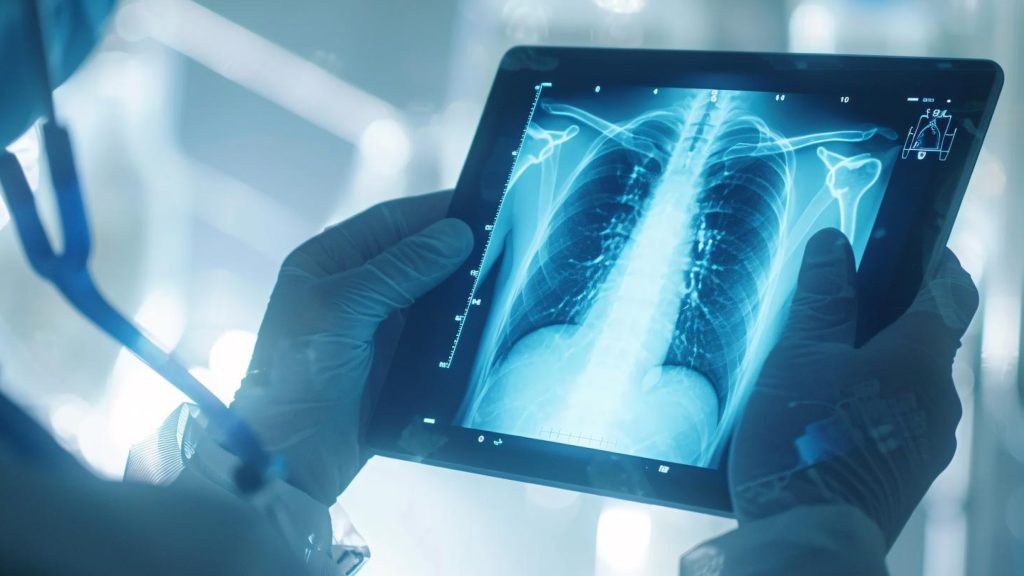
To bridge this diagnostic gap, an innovative community outreach initiative introduced a cutting-edge ultra-portable digital X-ray platform enabled with artificial intelligence (AI) for computer aided detection (CAD). This sophisticated technology enables the detection of abnormalities suggestive of TB even among individuals showing zero symptoms, fundamentally shifting how the respiratory disease is suspected, picked up and treated.
The Expert Perspective: The Silent Underground Threat
For artisanal miners, the physiological vulnerability created by mining experiences is compounded by the harsh working environment. Daily exposure to silica dust from crushing rock weakens pulmonary defense mechanisms, making miners uniquely susceptible to TB. When a miner carries the bacteria without showing symptoms, poorly ventilated, cramped underground shafts become highly efficient transmission zones.
“The traditional approach of passively waiting for a patient to develop a severe cough before testing them fails entirely in high-risk environments like artisanal mining,” explains Dr. Tawanda Mapuranga, UZT Regional Advisor and Technical Lead for CUFF-TB. “A seemingly healthy miner can continue working underground for months, unknowingly transmitting the bacteria to dozens of peers in poorly ventilated shafts. By the time they actually feel sick, a localized outbreak has already taken root.”
This is where the CUFF TB project’s integration of modern technology stepped in, shifting the paradigm from reactive diagnostic methods to proactive community active case finding.
High Tech Meets High Risk: How the AI Works
The cutting-edge mobile x-ray unit utilized a CAD-AI software, that acts as an instant and objective secondary reader. When a member of the community steps into the ‘x-ray room’ for a digital X-ray, the AI software scans the image in real-time, looking for microscopic structural abnormalities that are easily missed by the human eye during rapid, high-volume screenings.
The software flags these anomalies by assigning a computer-aided detection (CAD) score ranging 0-100, depending on extend or severity of interpreted abnormality that might otherwise have been missed entirely.
“In remote or resource-limited settings, we don’t always have a radiologist on-site to immediately read every single chest x-ray image,” says Radiographer Michelle Madzudzo. “The AI gives us immediate, precise targeting. When the software flags a high CAD score even in an asymptomatic individual, it allows us to immediately prioritize them for confirmatory testing and fast-track them into care. We are finding the disease before it finds the clinic.”
During recent outreach efforts, multiple active TB cases were successfully identified with the aid of this AI-powered radiology platform. A significant number of miners and high-risk community members who walked into the facility with zero classic symptoms walked out with an early diagnosis and immediate referral to treatment.
Breaking the Chain of Transmission
While many individuals are initially surprised by their diagnosis—having had no clue that they were carrying an active infectious disease—public health workers note that the overriding response has been deep gratitude.
From a clinical standpoint, early diagnosis is a game-changer for the patient. Catching TB in its subclinical phase translates directly to shorter, less toxic treatment regimens and minimal long-term lung damage.
For the wider community, the impact is structural. Every TB case identified and isolated on treatment represents a broken link in the chain of transmission. It protects families, co-workers, and neighbouring communities from a silent, spreading pathogen before an outbreak can take hold.
Ultimately, this technology is shifting deep-seated community attitudes around health and healthcare utilization. Seeing the roving team successfully identify hidden health threats has demystified the screening process. Even miners who once considered themselves “too healthy to have TB” are now voluntarily lining up for screening, affectionately dubbing the AI-powered mobile radiology system “the machine that sees what I can’t feel.”